About Us
What is merchant navy ?
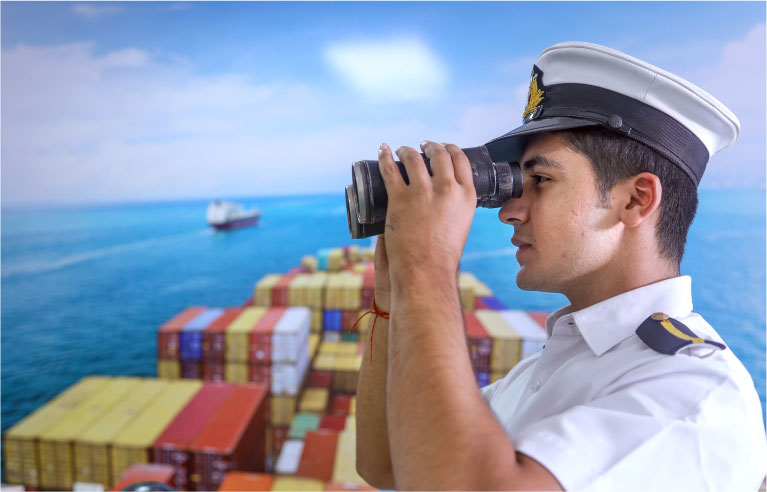
The Merchant Navy is a non-combatant, commercial fleet of ships responsible for transporting cargo (goods, raw materials, oil) and passengers across the globe. As the backbone of international trade, it operates civilian vessels—including container ships, tankers, and cruise liners—run by private or public shipping companies. The merchant navy is the backbone of the global economy, facilitating over 90% of international trade by transporting essential goods, raw materials, and energy resources.
Operating more than 58,000 vessels, this sector supports global supply chains, enables economic specialization, and generates over US $1.2 trillion in annual freight income. The Merchant Navy is vital to India's economy, supporting 95% of trade by volume and 68-70% by value, directly contributing to India's EXIM trade and maritime sector, which represents roughly 13-14% of the nation's GDP.



Key Features
Key Aspects of the Merchant Navy:

Purpose
Primarily designed for international trade and maritime commerce.

Composition
Comprised of trained civilian seafarers.

Operations
Divided into three main departments: Deck (navigation), Engineering (mechanical/electrical), and Catering.
Regulation
Governed by international maritime laws and national authorities (e.g., Directorate General of Shipping in India).
GDP Impact
Key Contributions to India's GDP

Trade Facilitation
The merchant navy moves nearly all of India's international trade, including essential commodities like crude oil, iron ore, and coal, securing the supply chain for economic production.

Foreign Exchange Earnings
Indian seafarers, comprising about 7% of the world's merchant mariners, generate substantial foreign exchange through remittances.

Logistics & Infrastructure
The sector stimulates allied industries like shipbuilding, ship repair, and port services, contributing to port-led development projects like Sagarmala.

Energy Security
Over 80% of India's oil and 50% of its gas requirements are imported by sea, with the merchant navy playing a critical role in transporting these, as reported by the India Foundation.
.png)
Employment Generation
The industry provides direct and indirect employment, with competitive salaries that range from ₹25,000 for freshers to over ₹10 lakh per month for senior
Career
Career in the Merchant Navy
A career in the merchant navy is known for high salaries, travel opportunities, and job security.
Entry Requirements: Generally requires a 10th, ITI(NCVT,DCVT),10+2( Commerce,Arts,PCB) for Ratings roles and 10+2 qualification with PCM( Physics, chemistry Mathematics) for officer roles.
Roles: Navigating Officers, Marine Engineers, Electro-Technical Officers, and Ratings.
Salary: Highly competitive, often in foreign currency, with significant growth potential based on rank and experience.

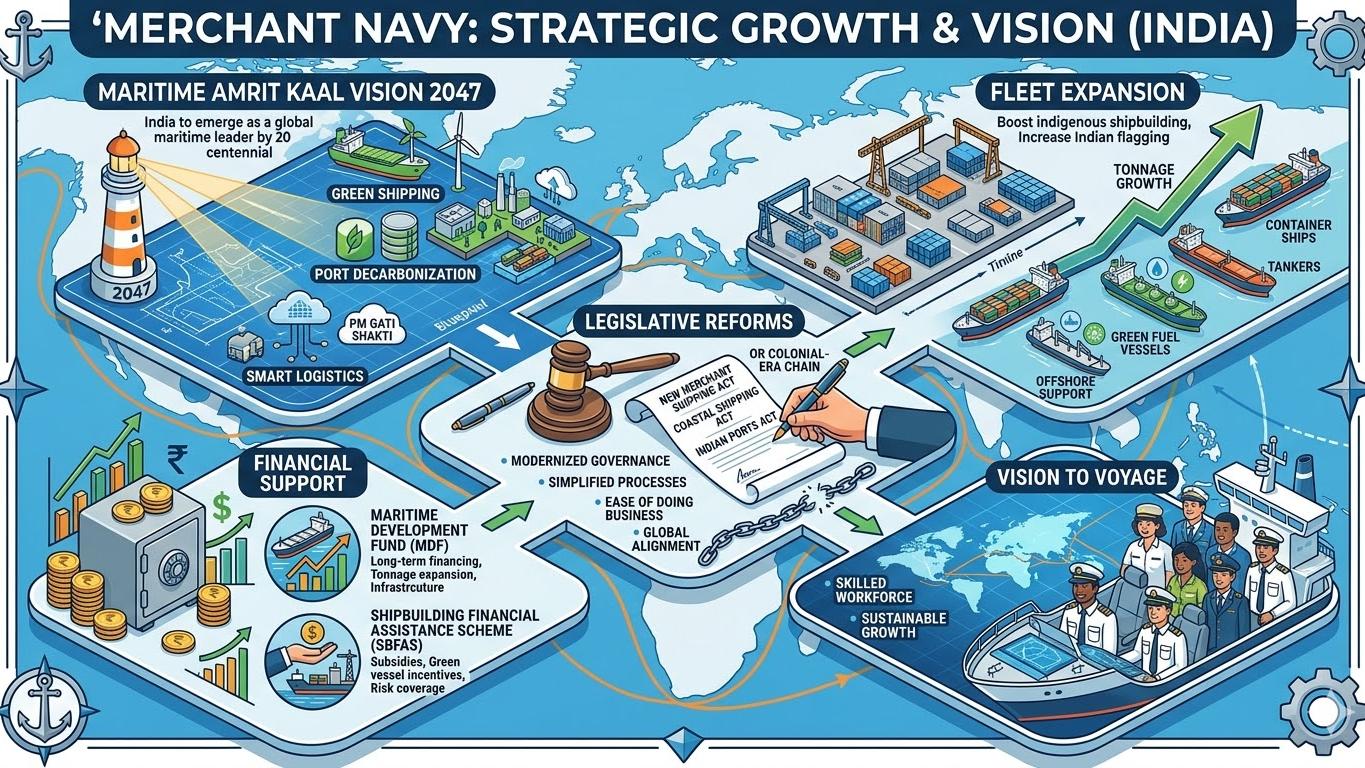
Strategic Growth & Vision (Amrit Kaal 2047) :-
The Indian government has launched several initiatives to further bolster the maritime sector's role in the economy:
Maritime Amrit Kaal Vision 2047: Aims for an investment of approximately ₹80 lakh crore, with the goal of creating 40 million jobs by 2047.
Fleet Expansion: Plans are in place to add at least 1,000 ships to the Indian merchant fleet over the next decade to reduce reliance on foreign vessels.
Legislative Reforms: The passage of the Merchant Shipping Bill, 2025, and the Coastal Shipping Act, 2025, seeks to modernise the industry and reduce bureaucratic barriers.
Financial Support: The creation of a ₹25,000 crore Maritime Development Fund provides long-term, low-cost financing for shipbuilding and infrastructure.
Conclusion Highlights
Key conclusions about the Merchant Navy include

Global Impact
As the lifeblood of the global economy, it connects continents by transporting raw materials, commodities, and, ultimately, the goods that drive industrial civilization.

Unique Career Path
It offers a blend of adventure and high pay, often featuring tax-free salaries (depending on country/time onboard) and structured career advancement from cadet to captain or chief engineer.

High Demands & Rewards
While offering significant financial compensation, the lifestyle is demanding, involving long, intense work hours, isolation from family, and strict safety, environmental, and technical responsibilities.
Future Growth
The industry is evolving with advancements in automation and green shipping, ensuring sustained demand for trained, skilled professionals in the maritime sector.
Character Building
: It is not merely a job, but a profession that instills discipline, leadership, and responsibility in individuals.
Professional Prestige
Being part of the Merchant Navy is respected worldwide for its discipline and responsibility.